The puzzling Mercator projection and how aircraft navigate
The Mercator projection, which is the map most of us grew up seeing in school and on almost every world map, becomes quite confusing once you learn what goes into making it. Throughout my childhood, I assumed that Greenland was nearly as large as Africa and that Antarctica covered most of the southern half of the planet. You can see why if you look at the familiar map that we all grew up with.
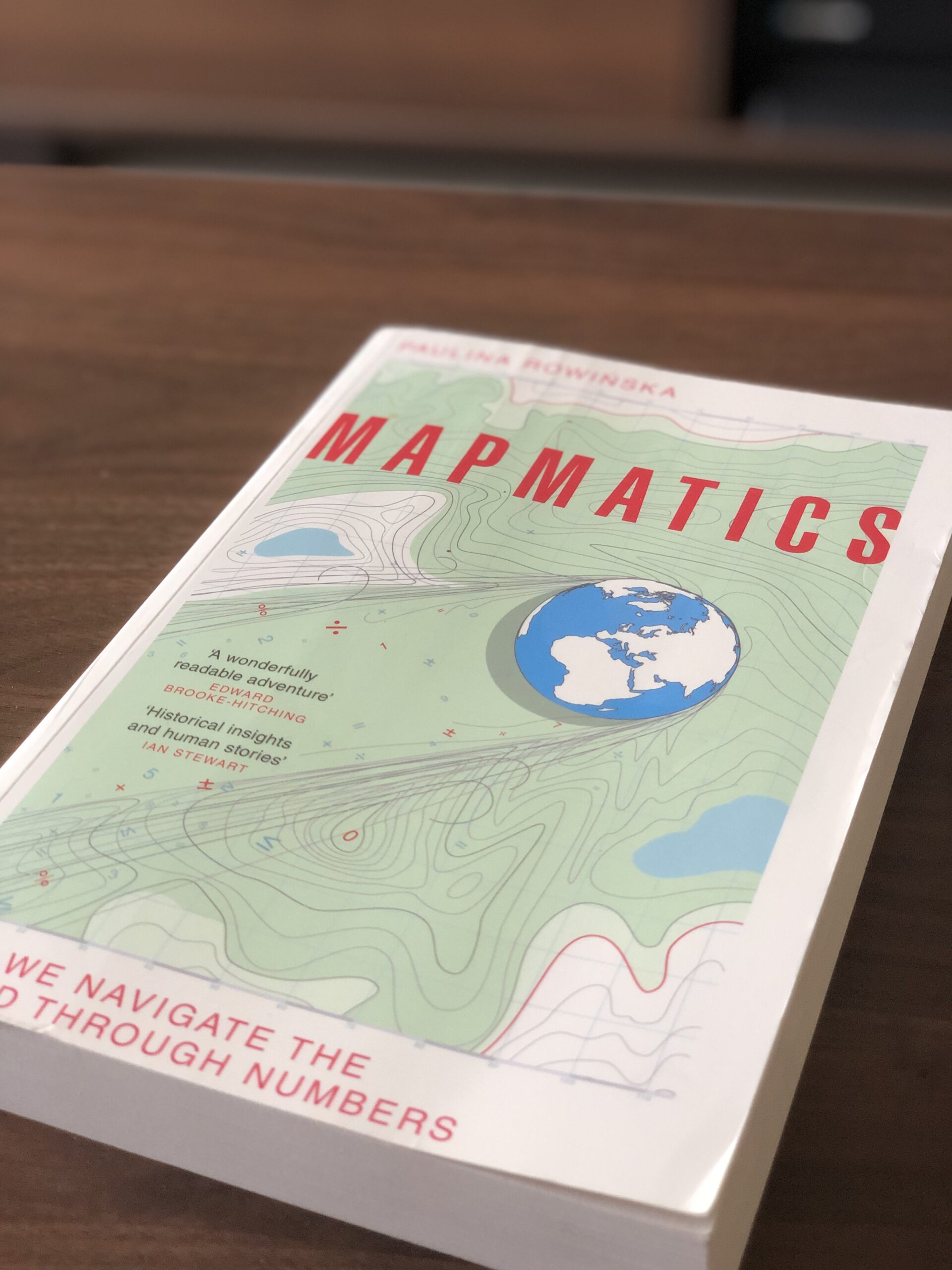
In reality, the truth is very different. I only discovered this much later in life after watching a documentary about map projections. More recently, I came across a book titled “Mapmatics” by Paulina Rowinska, which promised to explain these projections and many other aspects of cartography. I ordered it immediately, and I highly recommend reading it. It turned out to be a fascinating dive into how maps are constructed, and I learned many things I had never considered before.
The book opens by exploring how maps are made and how the famous Mercator projection came to be. The short version is this: you cannot accurately represent a sphere on a flat sheet of paper. To make it work, certain compromises must be made. Those compromises lead to distortions, especially near the poles, and that is what causes the confusion about the size of different continents.
Gerardus Mercator, who originally designed this map, imagined that there was a light source placed inside a transparent globe. The continents were drawn on the surface of the globe, and the light would cast their shadows onto a flat sheet of paper placed nearby. The resulting shadow outlines formed the map that we now recognize as the Mercator projection. This method preserves angles for navigation, but it is precisely what causes the continents near the poles to appear much larger than they actually are.
Another strange consequence of this projection shows up in a very common situation: the digital maps we use every day. Most online map services rely on the Mercator projection, and one experience in particular completely changed the way I thought about maps. While flying from Chicago to Delhi, I looked out the window and saw what I was sure were the Northern Lights. I was confused because I always assumed airplanes flew in straight lines across the map, just like the neat lines we draw between two cities in textbooks or on websites. It sounds naïve, but many people have the same assumption until they learn what is really happening. For that, I would like to thank the education system for convincing me that flat map straight lines must also be straight paths in reality.
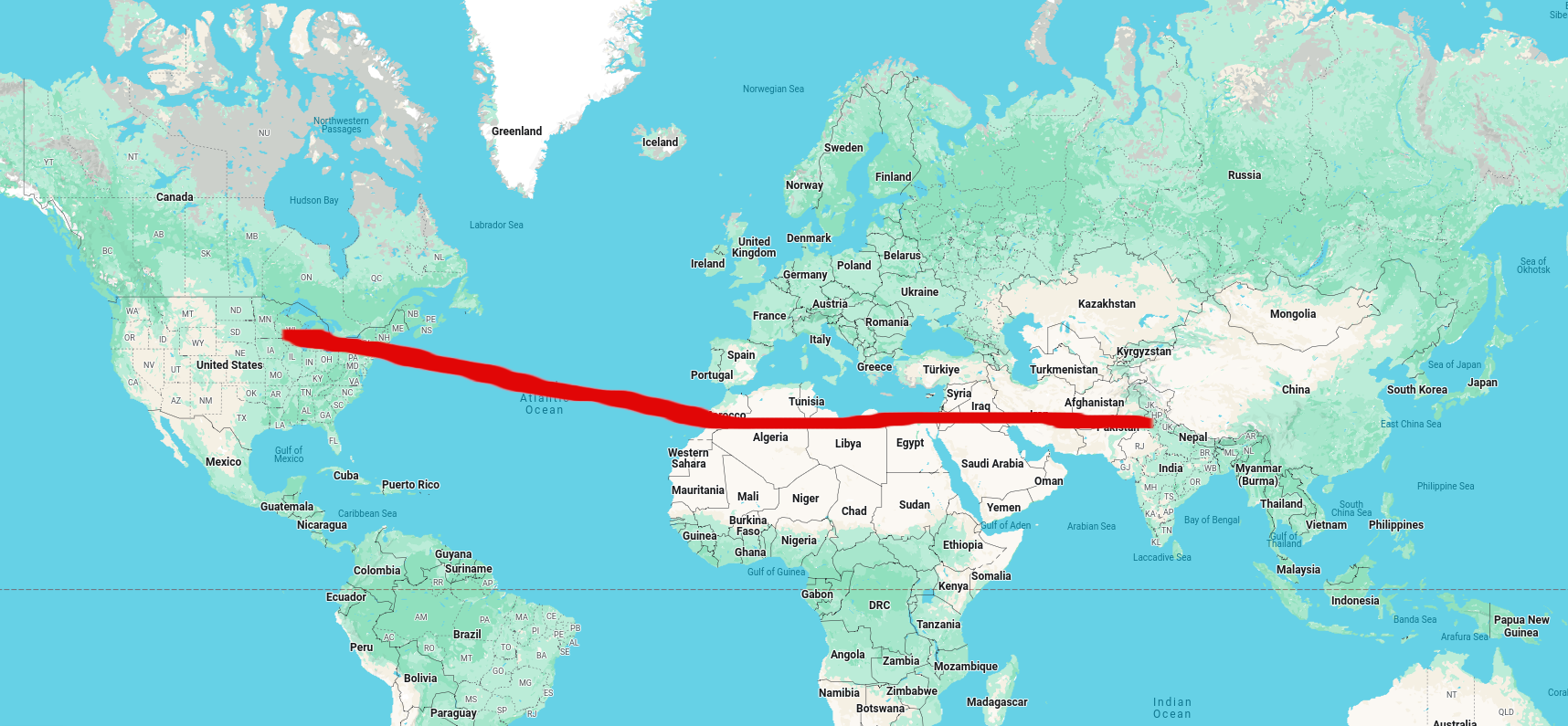
Jokes apart, I had no idea why I was seeing the Northern Lights when I believed we were flying close to the equator. The first clue came from the screen in front of my seat that showed the aircraft’s route, and it looked nothing like what I had imagined. There was no straight line at all.
Instead, the map showed us flying somewhere over Greenland, with a curved path that looked completely different from the straight trans-Atlantic line I had assumed. After doing some research, I learned that aircraft routinely fly over Greenland on long-distance flights between North America and Asia or the Middle East. But why would they do that? The answer becomes very clear when you use a globe.
If you place two pins at the departure and destination points on a globe and stretch a piece of string tightly between them, the path that the string naturally follows is almost the same path taken by airplanes. If you don’t have a globe, you can try this using Google Earth, which lets you view the world in 3D. We will be doing the same “string experiment” virtually using that tool.
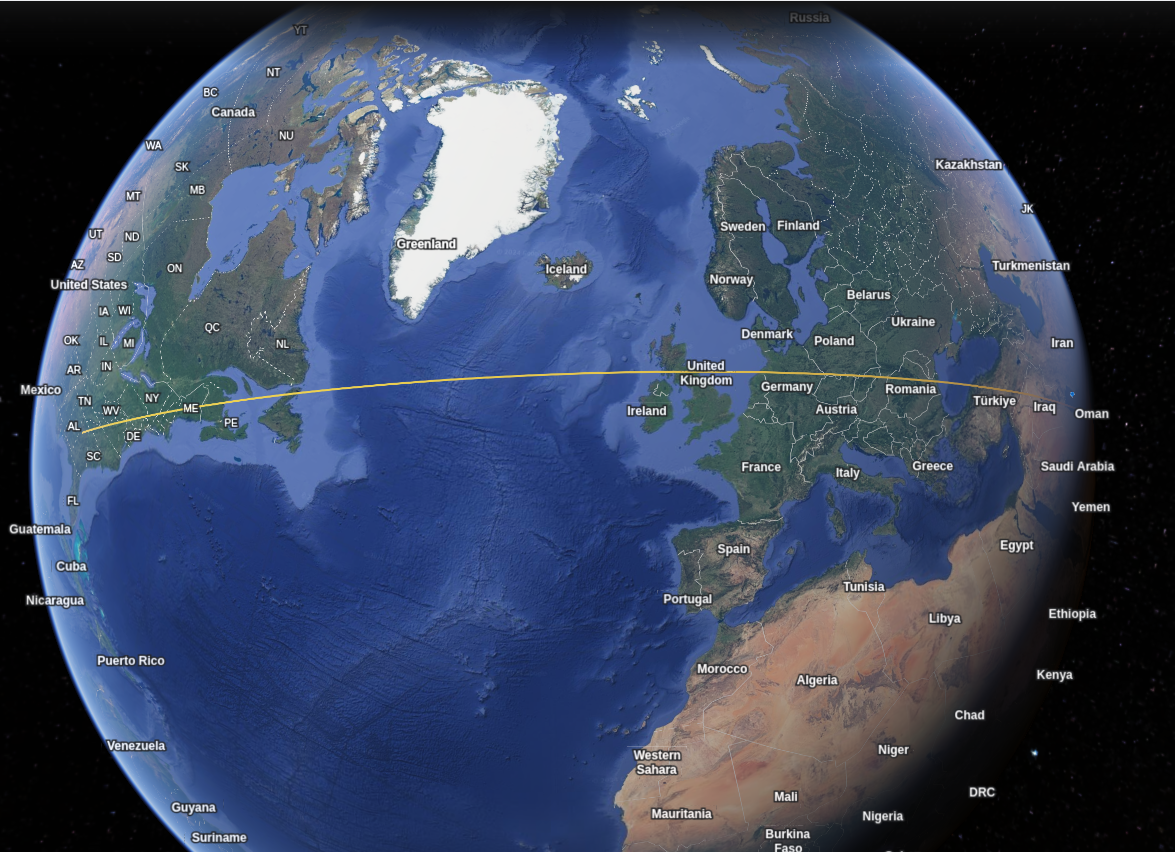
I plotted the route between Atlanta in the United States and Doha in Qatar. You can try this yourself using the polygon tool in the menu bar in Google Earth. Pick the source and destination just as we did before, and Google Earth will trace the shortest path. You will notice that the route bends northward, passing close to Greenland and the northern part of the United Kingdom.
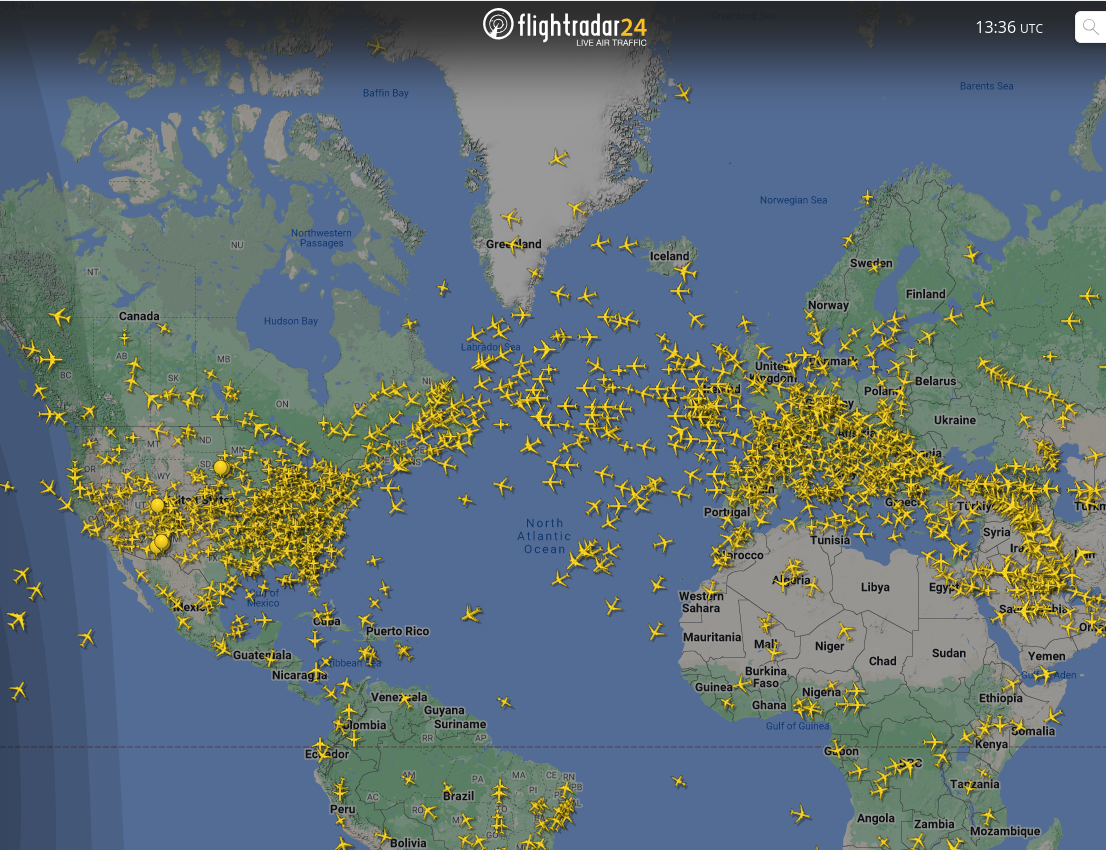
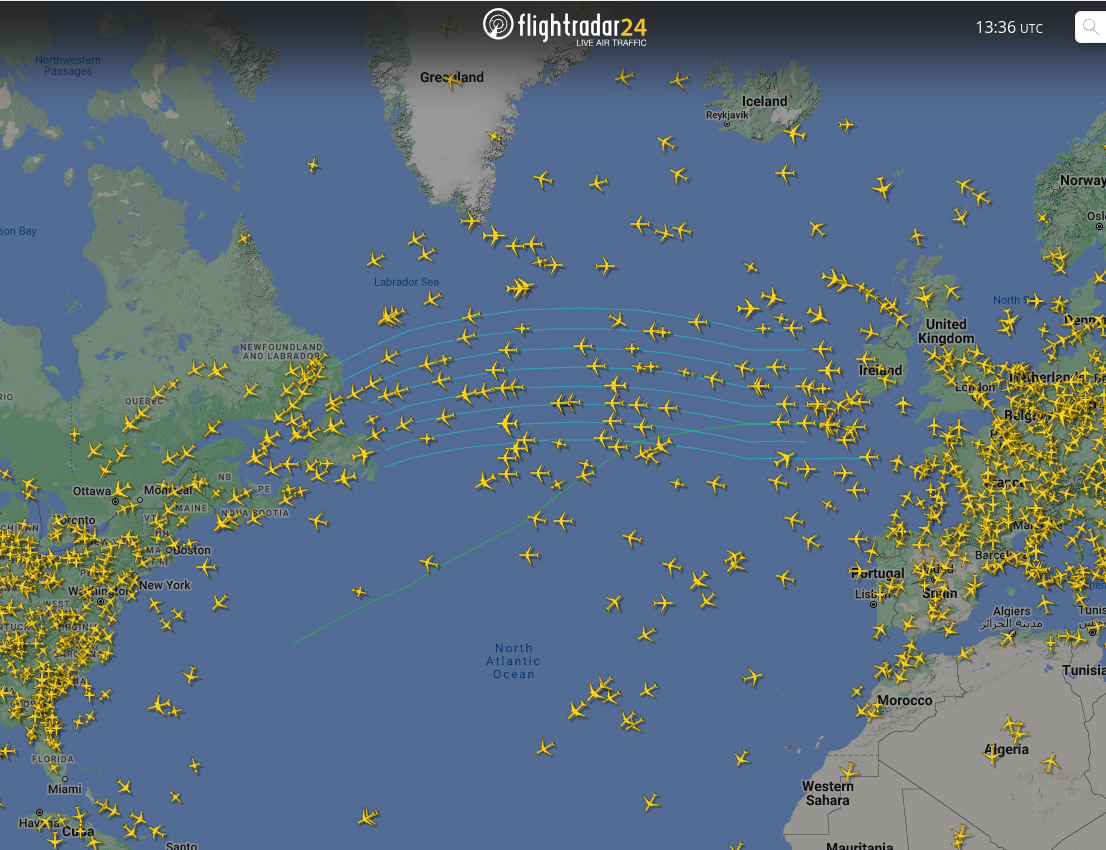
To show that this is not just a theoretical path but the same one aircraft actually use, we turn to the Flightradar24 website. When you open the site and zoom out, you will see dozens of aircraft moving across the Atlantic. Even without the route lines enabled, you can vaguely make out a pattern in how they travel. The image on the left shows aircraft positions without paths, and the image on the right shows the same scene with flight paths enabled. Notice how closely they match the Google Earth route we plotted earlier.
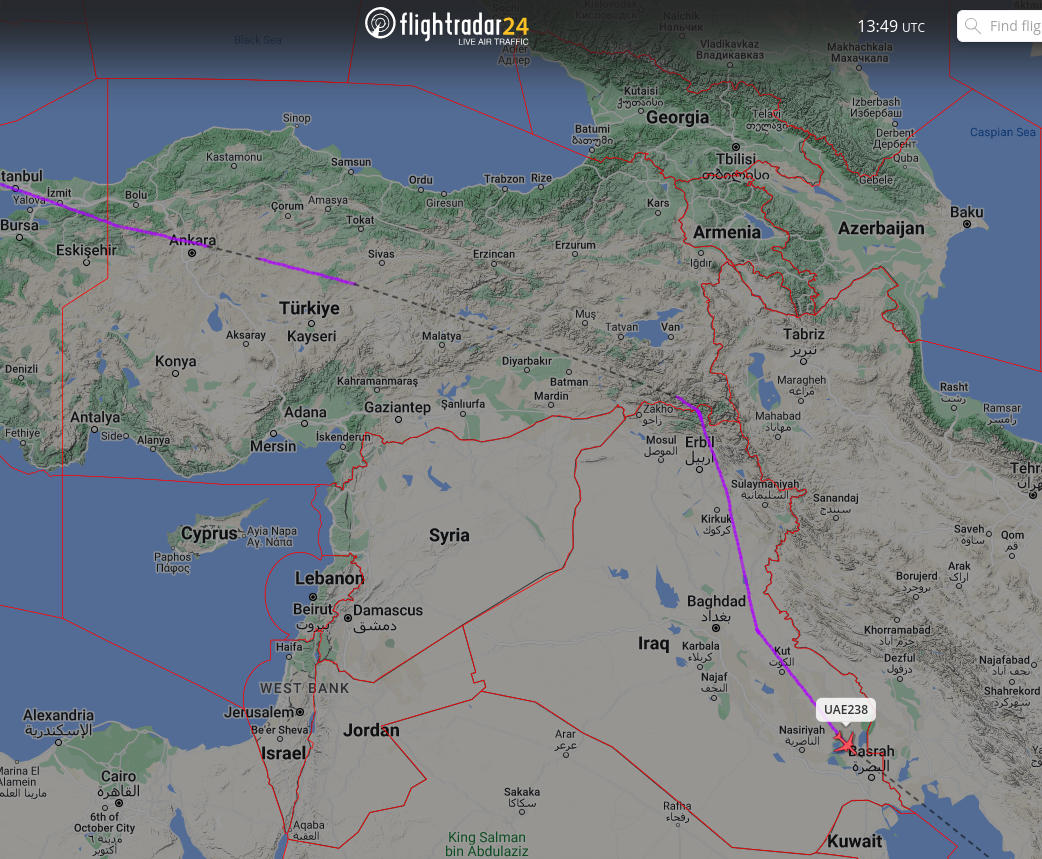
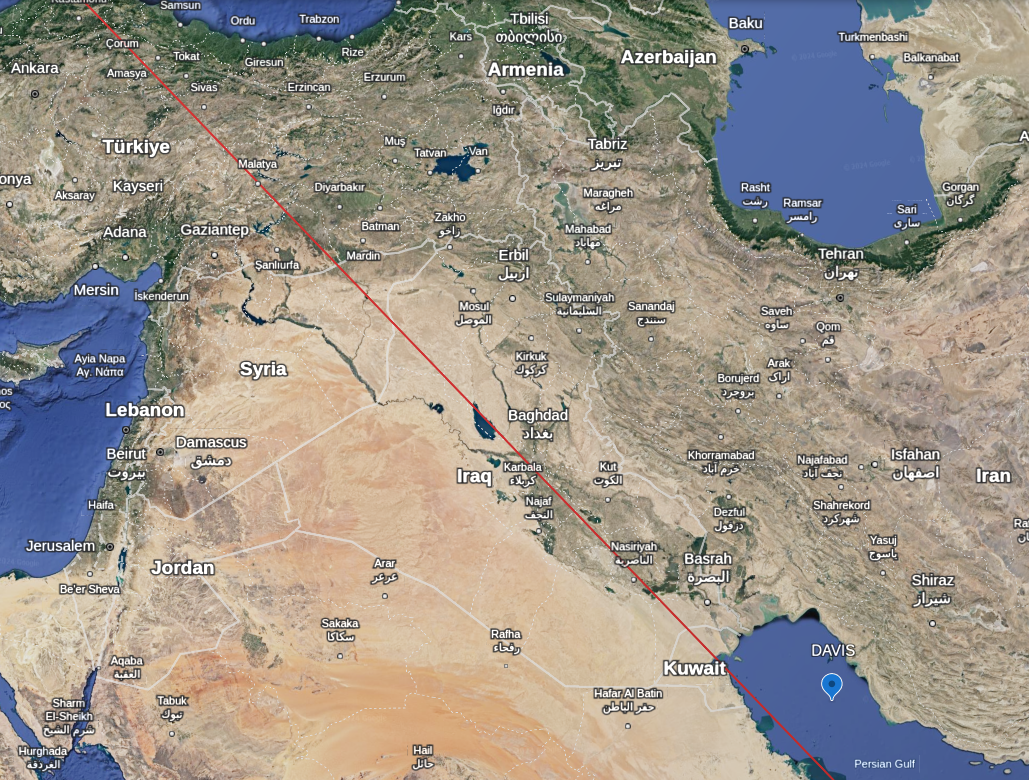
It is not always the case that aircraft follow the shortest path exactly. Sometimes, due to restricted airspace, geopolitical issues, or weather systems, the aircraft must take a detour and fly a slightly different route. For example, consider a flight from Boston to Dubai. The image on the left shows the actual path taken by the aircraft, while the image on the right shows the shortest route between the two cities as plotted using Google Earth.
The red lines in the left image mark different airspace boundaries. Each segment of controlled airspace is managed by a particular country or authority. In this case, the aircraft is clearly avoiding Syrian airspace and flying around it before continuing toward the Persian Gulf.
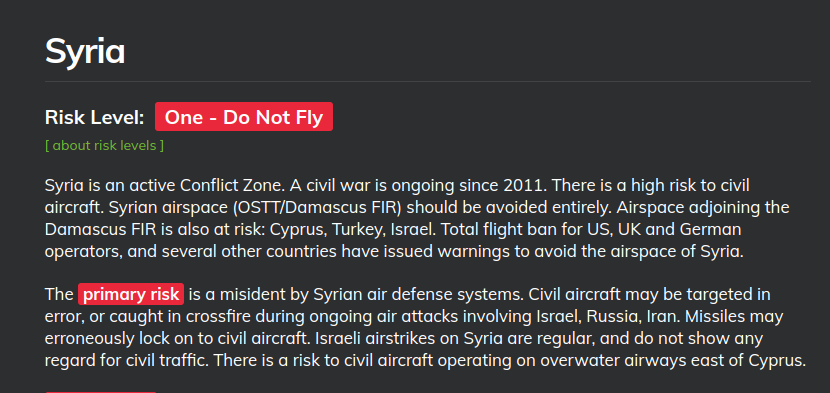
There is a website that you can use to check which airspaces are safe for civilian aircraft. The image below shows the Syrian airspace marked as unsafe for civilian overflights. This explains why flights in that region appear to deviate from the shortest path and take a longer route around the area.
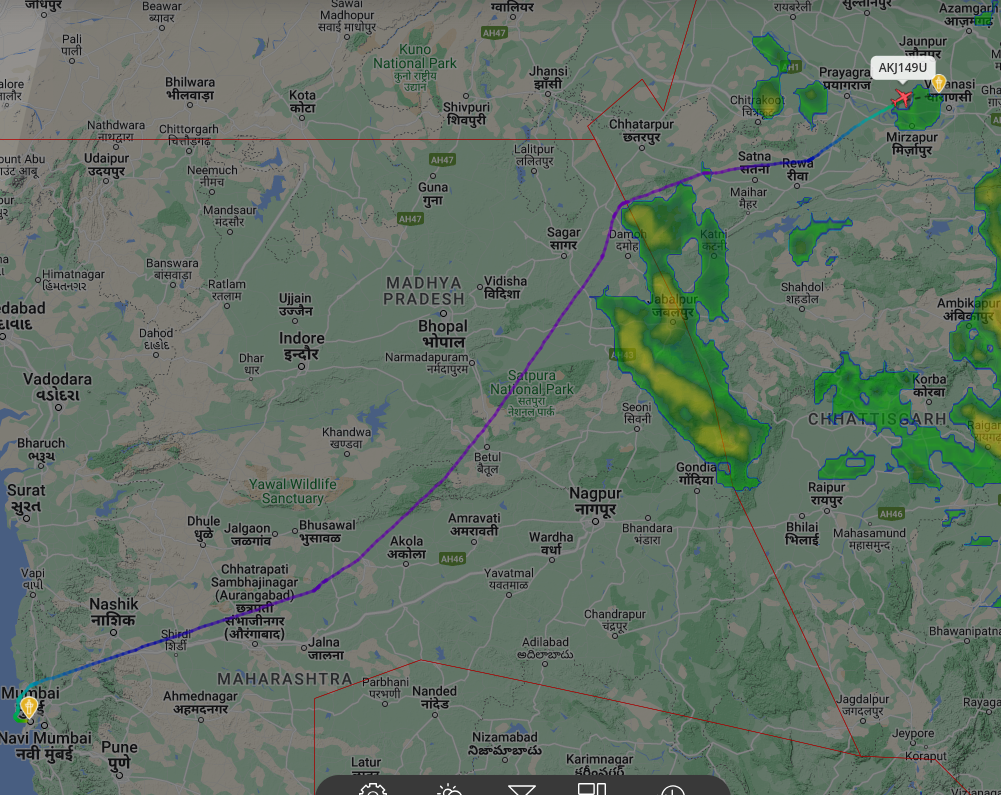
Sometimes, weather also causes a deviation in path as you can see in the image below. The flight from Mumbai to Varnasi takes a detour around a patch of intense precipitation.
In modern aviation, airliners do not fly freely across the sky; instead, they move along a structured system of routes defined by waypoints. These waypoints form an invisible network similar to the road system on the ground. Aircraft navigation computers store thousands of these coordinates, allowing flights to follow predefined paths with high precision.
On long-haul flights, these waypoint networks trace out the great-circle route as closely as practical. If you compare the plotted waypoints with the theoretical shortest path from Google Earth, you will notice that both bend toward the poles rather than crossing the Atlantic in a straight west-to-east line. This confirms that the shortest path in three-dimensional space matches what airplanes actually do in real operations.
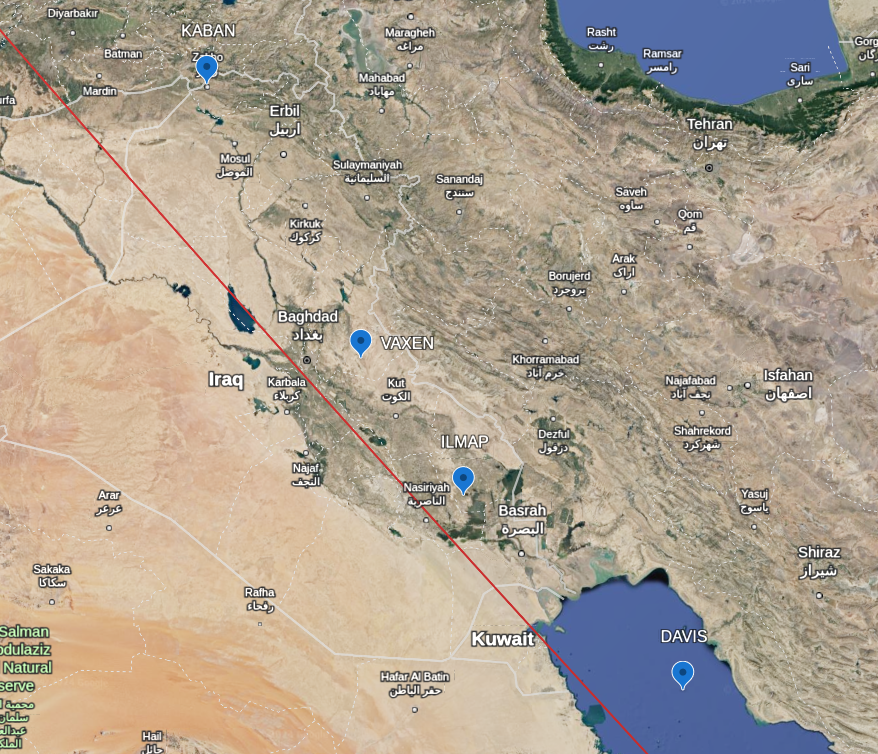
In the image below, I have plotted out a set of waypoints which are nothing but a specific set of coordinates that the aircraft use to navigate. They are kind of like landmarks, but imaginary. The red line is the path that we plotted before using google maps that sjows the shortest path between two places. You can see how those waypoints closely follow the line.
What all of this demonstrates is that our intuition about geography is shaped more by the maps we grow up with than by the geometry of the planet itself. The Mercator projection is extremely useful for certain tasks, such as navigation at sea, but it also hides fundamental truths about the size of continents and the way aircraft actually move around the globe. On a spherical Earth, the shortest path bends, continents change scale, and even straight lines refuse to behave the way they do on paper. Only when we look at a globe, or at tools such as Google Earth and Flightradar24, do we get a more accurate sense of how the world really works.